

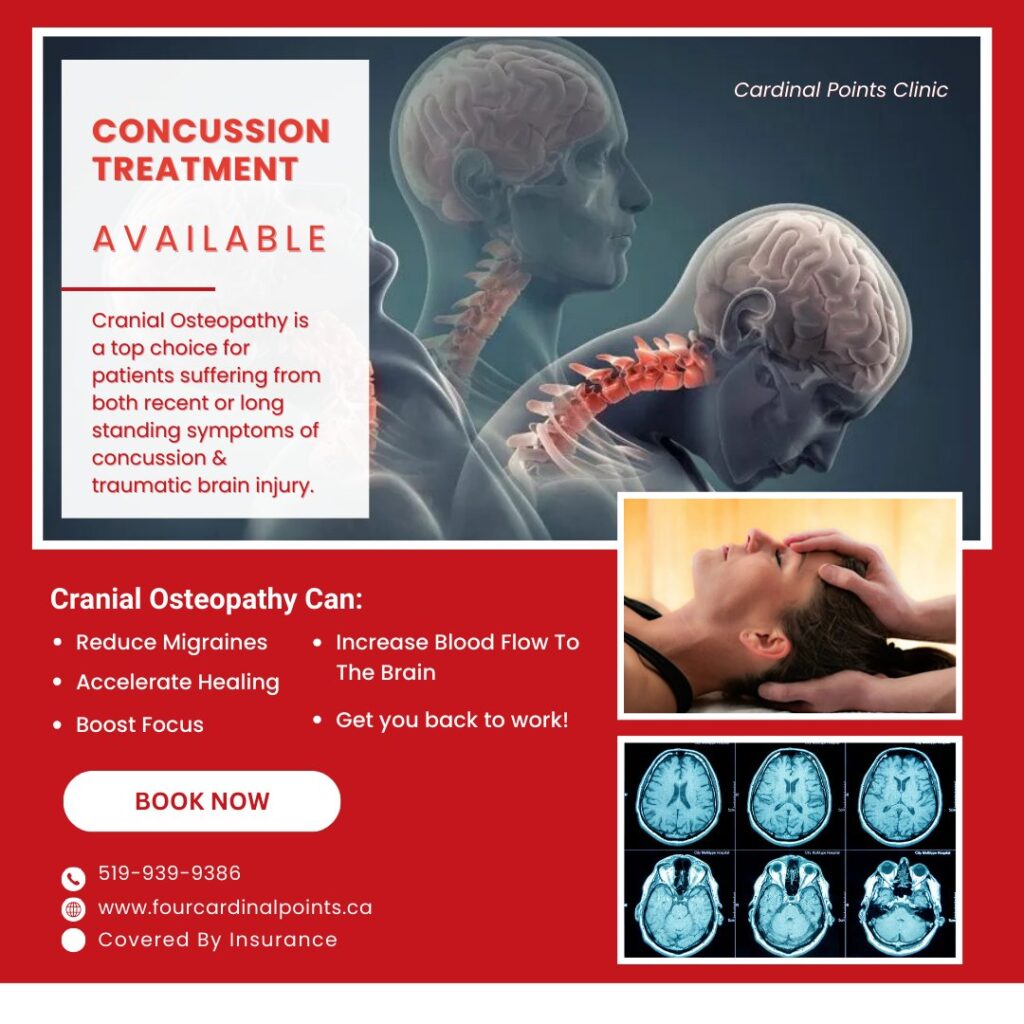
Concussion and traumatic brain injury (TBI) can have wide-ranging effects on the nervous system, cranial structures, and overall body function. While symptoms vary, many individuals experience persistent headaches, migraines, dizziness, brain fog, fatigue, sleep disturbance, light sensitivity and difficulty concentrating long after the initial injury.
Cranial osteopathy is a gentle, hands-on manual therapy approach that may support recovery following concussion or mild traumatic brain injury by addressing structural tension, neurological regulation, and fluid dynamics within the head and neck.
What Is Cranial Osteopathy?
Cranial osteopathy is a specialized form of osteopathic manual therapy that involves precise, subtle manipulation of the cranial bones, membranes, and surrounding soft tissues. Many do not realize that the skull is made up of 22 bones, and that they are connected by slightly mobile joints called sutures that allow the skull to actually slightly change shape.
Trauma to the head — whether from impact, whiplash, or sudden acceleration and deceleration — can disrupt normal motion patterns of these structures, leading to tension, compression, and altered neurological signaling.
Cranial osteopathic techniques aim to restore balance, mobility, and symmetry to the cranial system.
Reducing Cranial & Neurological Tension
Following concussion or head trauma, protective muscular guarding and fascial tension often develop in the scalp, jaw, neck, and upper shoulders. This tension can contribute to ongoing headaches, migraines, jaw pain, and neck stiffness.
Cranial osteopathy addresses these restrictions through gentle manual techniques that:
• Reduce mechanical strain on cranial sutures and membranes
• Decrease excessive tension in surrounding musculature
• Calm overactive neurological responses
By improving the mechanical environment of the skull and nervous system, symptoms such as pressure headaches and migraine-type pain may be reduced.
Supporting Blood Flow & Neurological Recovery
Optimal healing of brain tissue relies on adequate blood supply and efficient circulation. Restrictions in the cranial base, cervical spine, or surrounding soft tissues may interfere with normal vascular and fluid movement.
Cranial osteopathic treatment focuses on improving the mobility of structures that influence cerebral blood flow and venous drainage. Improved circulation supports oxygen delivery, nutrient exchange, and metabolic waste removal — all essential processes in neurological recovery.
While cranial osteopathy does not replace medical management, improved circulation may help create an environment more favorable for healing.
Relaxation of the Nervous System
Concussion often places the nervous system into a prolonged state of stress or hyper-arousal. Many patients report difficulty sleeping, heightened sensitivity to light or sound, and persistent fatigue.
Cranial osteopathy has a calming effect on the autonomic nervous system. Gentle cranial techniques are known to promote parasympathetic (rest-and-digest) activity, allowing the body to shift out of survival mode and into a state more conducive to repair and recovery.
Patients commonly report deep relaxation during and after treatment.
Supporting Fluid Movement & Tissue Health
Healthy neurological function depends on proper movement of cerebrospinal and interstitial fluids. Following trauma, fluid congestion or stagnation may contribute to inflammation and delayed recovery.
Cranial osteopathic techniques aim to optimize fluid motion within the cranial system, supporting the body’s natural processes of tissue repair and metabolic waste clearance. This may assist in reducing lingering inflammation and supporting long-term tissue health.
A Gentle, Patient-Centered Approach
Cranial osteopathy is non-invasive, gentle, and adaptable to each individual’s tolerance and stage of recovery. Treatment is always tailored to the patient’s symptoms, history, and overall presentation.
At Cardinal Points Clinic, cranial osteopathy is often integrated with other manual therapy approaches to support whole-body healing following concussion or traumatic brain injury.
There Is Support for Recovery
Persistent post-concussion symptoms can be frustrating and exhausting, but recovery does not have to be navigated alone. A thoughtful, hands-on approach focused on restoring balance, reducing tension, and supporting neurological health may play a valuable role in the healing process.